|
|

|

|


Making the Countertop Mold


Q1: |
What should I know about concrete countertop mold-making?
|
|
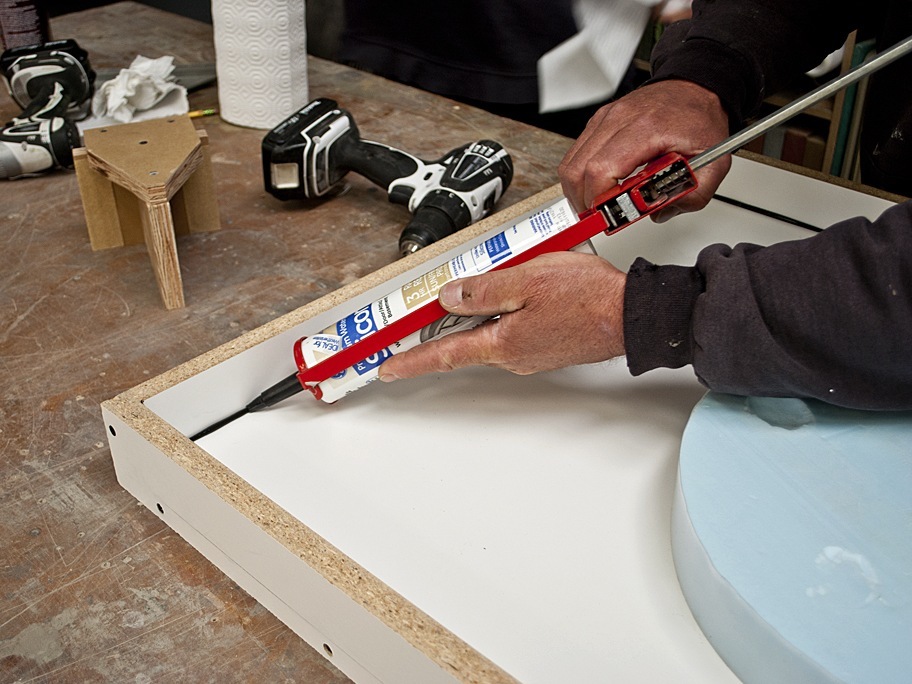
Mold-making is an art — and science — unto itself. Molds can be simple or complex, designed for thick or
thin and horizontal or vertical applications, and made from a variety of materials. Molds for precast
projects are made in the reverse and negative of the shape you wish to create. The Concrete Countertops
book and the Concrete Countertops DIY Instructional DVD tell you how to make a level, watertight mold for a surface
that is meant to be finished with a grinder and include detailed mold-making tips, such as creating
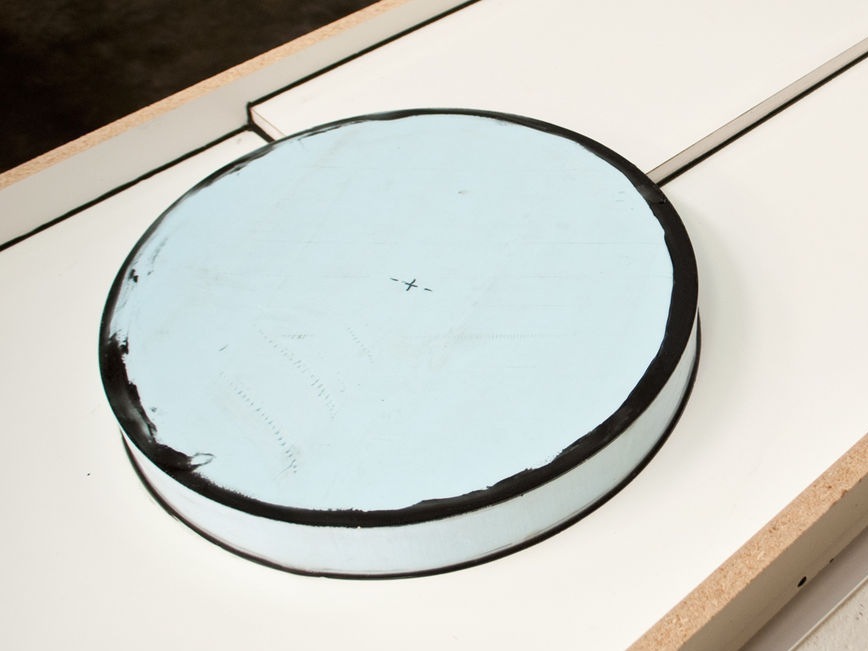
sink knockouts and incorporating divisions into longer pieces.
|
 |
Q2: |
How thin or thick can I cast my concrete countertop?
|
|
At Cheng Design, we prefer thicker (from 2" to 3" thick depending on the project) rather than thinner
tops, as we like the sense of mass a thicker top provides. Thicker tops also allow you to include a bailing
wire and rebar support system within the piece.
The challenge of a thin concrete countertop is ensuring the reinforcement material lies flat within such a
narrow space such that it isn't so close to the countertop surface that it creates a "ghosting"
effect (a slight discoloration in the surface of the concrete along the lines of the wire or rebar).
When casting a thin countertop, or other thin pieces like back splashes and toe kicks (which you can
think of as casting concrete "tiles"), we use wire screen for structural support. For thin pieces, make
them in a moderate dimension (not too long and narrow as they can crack and break very easily), and use
additional care when handling and installing them.
|
 |
Q3: |
Do your concrete countertops have integral sinks?
|
|
Yes, we have, on occasion created integral sinks, as have many other fabricators (see our
Concrete Countertops book for examples). One reservation to this technique is that constant
water flow from the faucet to the concrete surface of the sink will eventually erode the top
"cream" layer in that spot, leaving a permanent blemish that will only get deeper over time.
Another, is that in a kitchen application, the wear and tear from everyday use (washing heavy
pots and pans, pouring wine or acidic juices in the sink, etc.) can significantly impact the
finish and overall appearance of the sink area (which is why we favor stainless-steel sinks
in kitchen applications. That said, nothing beats a cast, integral sink for looks—it's the
long-term wear and tear of the sink that is affected.
|
 |
Q4: |
What are decorative inserts?
|
|
Inside standard bagged concrete (like Quikrete 5000) is natural stone aggregate. When you grind
the surface of your countertop, you are removing the "cream" layer to reveal these stones,
which can vary throughout the country as bagged concrete is regionally produced. Some people
trying to achieve the "ground" look are happy with revealing the aggregates that come with the
bagged concrete. While others, trying to achieve a truly unique or custom look, will
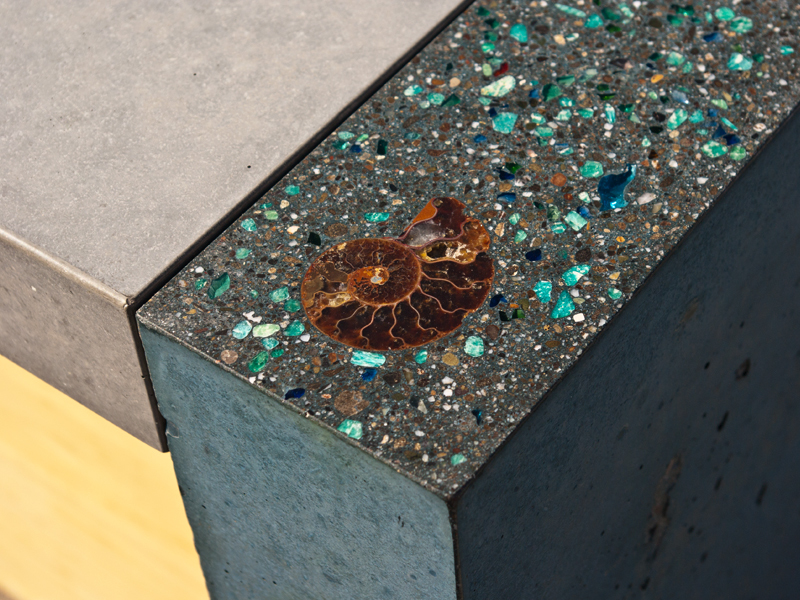
supplement natural aggregate with decorative aggregate (see Decorative Inserts in the Product Catalog) and place them into
their mold. This addition is an aesthetic decision and has no impact on the structural integrity or
durability of your countertop. For more information on grinding and polishing, refer to
"Grinding and Polishing", pages 136-142, in Concrete Countertops.
|
 |
Q5: |
What decorative inserts do you recommend for each NeoMix color?
|
|
There is no right answer when it comes to choosing decorative aggregates (see Decorative Inserts) for your concrete countertop. Because this process is completely
optional and based on personal aesthetics and preference, feel free to choose the insert or combination
of inserts that you desire. Whether you are striving for a subtle monochromatic look, or a standout
terrazzo-like finish, you are only limited by your imagination, so have fun! To see Cheng Design's
recommended color and decorative insert combinations Click Here.
|
 |
Q6: |
If I am not grinding, do I still need decorative inserts?
|
|
If you are not grinding the concrete countertop, you are leaving the creamy, aggregate-free layer alone and intact,
and finishing with only light polishing. Since you are not grinding to reveal any aggregates,
decorative inserts would not be revealed from beneath the surface; therefore, they are not
needed with this type of finish.
|
 |
Q7: |
How do I achieve a "terrazzo-look" with my concrete countertop?
|
|
Terrazzo is an age-old technique of casting bits of stone into another substance and then
grinding the hardened surface away to expose the added material. You can add broken glass
to the entire mix as though it were another aggregate, or simply scatter glass into the
mold and then pour over it. When using the latter technique, add at least 50% more glass
than you want to have showing in your finished countertop piece, as much of it will migrate away
from the bottom of the mold when pouring and vibrating the mix.
To get around this, we sometimes add a little water-soluble white glue to the glass
before scattering it onto the bottom of the mold or, alternatively, use a spray adhesive
on the bottom of the countertop mold. Once the glue sets, the glass will be stuck to the bottom of
the mold and won't migrate during the pour. Be mindful to use as little as possible and
still get "tack."
Our product catalog includes decorative aggregates—bits of semi-precious stone,
mother-of-pearl, or tumbled glass—which can be cast into the countertop and then
exposed by grinding the surface once it's fully cured, or hardened
(see Decorative Inserts). You can grind your countertop a little or a lot,
depending on how much of the aggregate you'd like to expose and the aesthetic
you're trying to achieve. For more information, refer to "Grinding and Polishing,"
pages 136-142, in Concrete Countertops.
|
 |
Q8: |
How do I divide a large piece into sections? Also, how do you get a bullnose edge without pouring right-side-up?
|
|
In Chapter 2, "Building the Mold," of Concrete Countertops, Fu-Tung explains the simple technique of using an
aluminum divide. A more sophisticated approach is to shape the metal divide into a "Z" shape that acts as
a "key" between the two sections. Another option is to affix a half-dowel on the metal divide to act as the key.
There are many ways to make bullnose edges, none of which are very easy. We have made them by building up a
plaster edge with a shaped edging tool (made from sheet metal), then smoothing and coating the plaster with
shellac. We have also heat-formed plastic Mylar, laminate and foam edges as well. This and other advanced
mold-making techniques are covered in our Advanced Concrete Countertop Design Training.
|
 |
Q9: |
Is it possible to build a form around existing countertops and pour concrete directly over this surface?
|
|
Generally not recommended. Depends on the condition of the existing countertop.
|
 |
|
 |
|


|

|
|