
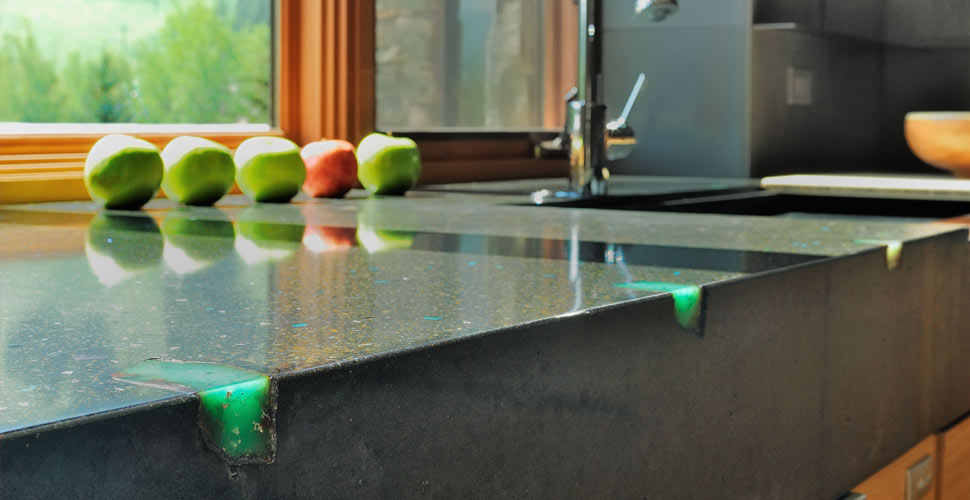
Concrete is a remarkable material—practical, expressive, and aesthetic all at once. From a primal, formless slurry, it can be shaped into virtually any form and transformed into a solid, lasting mass. The creative possibilities are nearly endless. It can be ground, polished, stamped, stained, or embedded with meaningful objects, becoming both functional and deeply personal.
Concrete bridges the gap between art and craft, architecture and construction. Projects born from hands-on interaction with the material—guided by an understanding of design principles—can carry a unique sense of power and emotional connection.
With substance and mass, permanence and warmth, concrete feels rooted to the earth. It works equally well in traditional and modern spaces, taking on forms that are part of everyday life: bridges, highways, floors, walls… even countertops. Its tactile qualities can surprise—cast and shaped, it can feel like stone rounded by the sea; textured and colored, it can echo the patina of timeworn tile.
Over the past several decades, designers and craftspeople have experimented with concrete in countless ways, proving it to be as versatile indoors as it is outdoors. Kitchens, baths, fireplaces, patios, garden paths, and water features all benefit from its adaptability. As a flooring material, it offers enormous creative freedom—whether seeded, stained, stamped, broom-finished, or polished. It can stand alone as the main visual feature or work in harmony with tile, mosaics, decorative aggregates, stone, wood, or metal. In addition to its beauty, it is durable, noncombustible, resistant to decay, and highly effective for passive solar gain when used appropriately.
Vertical applications open yet another realm of possibilities. Concrete walls can bring back the monolithic presence of traditional construction—a feeling of strength and protection. They need not be flat or straight; they can curve, undulate, and be textured to feel as rough as stone or as smooth as glass.
Concrete Exchange aims to inspire homeowners, artists, designers, architects, and professionals to explore this material’s potential. With the right techniques, tools, and products, it is possible to create work that is not only functional but also a true expression of creativity. The CX Pro-Formula line and accompanying accessories, tools, and instructional resources are designed to support both professionals and DIY enthusiasts in achieving beautiful, durable results.
A concrete countertop, for example, can be strong, unique, and reflective of personal style—an enduring expression of craftsmanship and pride.
Concrete invites experimentation. It rewards those willing to get hands-on, to shape, carve, and refine. The possibilities are limited only by imagination.